
From Medical Illustrations to Trial Animations: Visual Tools for Litigation
Legal cases often involve complex facts that are difficult to explain with words and documents alone. Medical conditions, accident scenes, injury details, timelines, and technical evidence can be challenging for jurors, judges, and opposing counsel to understand quickly. This is where visual tools for litigation can make a meaningful difference.
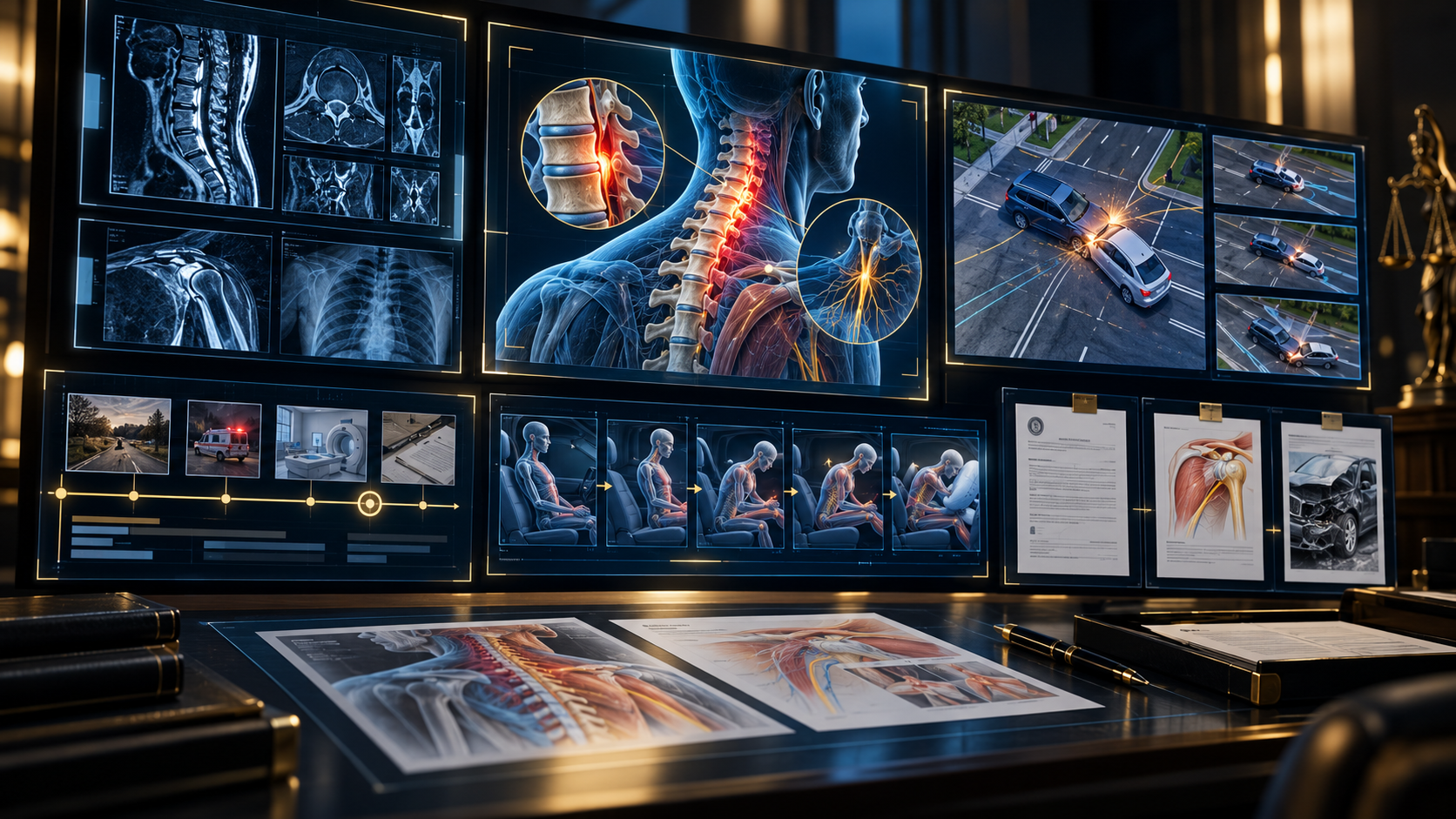
From medical illustration for trial to trial animations, attorneys can use carefully designed visuals to explain complicated evidence in a clear, organized, and understandable way. Professional litigation graphics can turn technical information into visual evidence that supports a case presentation without overwhelming the audience.
What Are Litigation Visuals?
Litigation visuals are graphics, illustrations, animations, timelines, presentations, and other demonstrative materials created to help explain evidence during a legal proceeding. These materials are commonly used during trials, depositions, mediations, arbitrations, and settlement discussions.
Litigation graphics in the USA can cover many different types of evidence. Depending on the case, an attorney may need an injury illustration, accident reconstruction animation, medical diagram, timeline exhibit, or interactive presentation.
The purpose is not simply to make a presentation look professional. A well-designed demonstrative should help the audience understand the evidence and follow the attorney's explanation more easily.
Medical Illustrations for Complex Injury Cases
Medical information can be particularly difficult for people without a medical background. Terms involving anatomy, surgery, trauma, internal injuries, or treatment procedures may require extensive explanation.
A medical illustration for trial can provide a visual representation of an injury or medical condition. For example, an illustration can show the location of an injury, explain affected body structures, or demonstrate how an accident may have resulted in specific physical damage.
These visuals can be useful in personal injury, medical malpractice, workers' compensation, and other cases where medical evidence plays an important role.
Instead of relying entirely on medical records or verbal explanations, attorneys can use professionally prepared illustrations to help communicate the relevant information in a more accessible format.
Trial Animations and Accident Reconstruction
Some evidence is difficult to demonstrate using a static image. When movement, sequence, or timing is important, animations for trial can provide another way to present the evidence.
For example, an accident reconstruction animation may visually demonstrate how vehicles, people, or other elements interacted during an incident. An animation can also help explain the sequence of events when the details of an accident are disputed.
Animations and illustrations for trial should be developed around the evidence available in the case. Measurements, photographs, expert opinions, diagrams, reports, and other case materials can help establish the information that the visual presentation needs to communicate.
When used appropriately, animation can make a complicated sequence easier to follow while allowing an attorney to explain the evidence step by step.
Trial Demonstratives for Attorneys
Trial demonstratives in the USA can include much more than courtroom animations. Attorneys may use charts, diagrams, timelines, medical illustrations, photographs, maps, presentation slides, and other visual materials.
A timeline exhibit for trial, for example, can organize important events chronologically. This can help an audience understand when an incident occurred, what happened afterward, and how different pieces of evidence connect.
Similarly, expert witness demonstratives can help explain technical opinions. An expert may need to communicate medical, engineering, financial, scientific, or accident-related information. A visual aid can give the attorney and expert a structured way to walk through that information.
The most effective demonstratives are usually focused on a specific communication goal. Instead of placing too much information on one slide or graphic, each visual should help answer a particular question or explain a particular part of the case.
Demonstrative Evidence in Mediation
Visual evidence is not limited to the courtroom. Demonstrative evidence in the USA can also be valuable during mediation and settlement discussions.
A mediation presentation can help attorneys organize the facts of a case and present important evidence in a logical sequence. Visuals may include medical illustrations, accident diagrams, timelines, photographs, damages information, or other case-specific graphics.
For attorneys handling cases in Michigan, a mediation presentation in Grand Rapids can provide a structured way to communicate important case information during settlement discussions.
Because mediation often involves reviewing a large amount of information in a limited amount of time, clear visuals can help participants understand the key facts being presented.
Injury Visualization and Case Storytelling
Injury cases often involve information that cannot be easily observed. A person may have internal injuries, long-term physical limitations, or damage that requires medical explanation.
Injury visualization in Grand Rapids and other locations can help attorneys present these details through carefully prepared illustrations and graphics. Visual storytelling can connect the accident, injury, treatment, and resulting impact in a way that is easier to follow.
The goal is to present the evidence clearly rather than exaggerate it. Accurate visuals should remain consistent with the available evidence and the testimony or opinions supporting the case.
Flat-Rate Litigation Support
Legal teams also need predictable workflows and budgets when preparing case materials. Flat rate litigation support can provide a straightforward approach for attorneys who need professional visual materials without an uncertain billing structure.
Trial Template provides litigation support focused on creating custom visual materials for legal cases, including trial demonstratives, graphics, animations, medical illustrations, timelines, and presentations.
By working with a litigation support team, attorneys can focus on case strategy while experienced professionals handle the visual communication side of the presentation.
Choosing the Right Visual Tool for Your Case
Every case has different evidence and presentation requirements. A medical malpractice case may benefit from detailed anatomical illustrations, while an accident case may require reconstruction graphics or animation. A complex commercial dispute may be better served by timelines, charts, and presentation graphics.
Before creating a demonstrative, consider:
What evidence needs to be explained?
Who will be viewing the presentation?
Is the information medical, technical, chronological, or spatial?
Would a static graphic or animation communicate the point more clearly?
Does the visual accurately reflect the supporting evidence?
Answering these questions can help determine which type of litigation visual is appropriate.
Create Clearer Case Presentations With Trial Template
Complex evidence does not have to be difficult to communicate. From medical illustration for trial and accident reconstruction animation to trial timelines, expert witness demonstratives, and litigation graphics, visual tools can help attorneys organize and explain important case information.
Trial Template provides custom litigation support designed around the needs of legal professionals. Whether a case requires a single demonstrative or a complete visual presentation, the right graphics can help make complex evidence easier to understand.
If you are preparing for a trial, mediation, deposition, or settlement presentation, explore the litigation visual solutions available from Trial Template and determine which tools can best support your case.